Architects and commercial contractors frequently face a dilemma when specifying resilient flooring. The choice between virgin vs. recycled rubber flooring is often clouded by industry hype. A common myth suggests that virgin rubber is inherently safer or cleaner, while recycled rubber is viewed as a low-quality alternative. These assumptions complicate the specification process of identifying performance requirements, selecting appropriate materials, and defining installation standards to ensure durability and compliance. This is especially true when balancing project budgets, aesthetic appeal, and strict environmental standards.
The reality is much more nuanced. When comparing virgin and recycled rubber materials, both offer exceptional performance and safety, provided they meet the right industry standards. However, they serve entirely different design and functional purposes. This guide from AMARCO Products breaks down the differences between these materials, helping you specify your next commercial project with absolute confidence.
Beyond the Marketing: The Science of Sustainability and IAQ
Sustainability and indoor air quality (IAQ) are non-negotiable elements in modern commercial architecture. Building owners are demanding stricter green certifications and specific LEED point targets, as LEED is the most widely recognized green building rating system in the world. The result is that the flooring materials you select carry significant weight.
The commercial flooring industry is saturated with marketing claims that blur the lines between material origin and actual performance. To make informed decisions, professionals must separate these marketing narratives from scientific facts. Understanding the true relationship between material composition, structural integrity, and volatile organic compounds (VOC) emissions allows you to prioritize the features that actually impact the health and longevity of the built environment.
The Technical Reality of IAQ and Sustainability
When evaluating rubber flooring for high-performance buildings, keep these technical pillars in mind, including the truth about indoor air quality (IAQ) and sustainability:
-
VOCs vs. Odor: It is a scientific fact that smell is not a reliable indicator of toxicity. Some virgin rubber products have a distinct sulfur-like scent upon installation, but emit zero harmful chemicals. Conversely, some odorless products may off-gas harmful VOCs.
-
LEED Credit Contribution: Recycled rubber flooring typically contributes to MR Credits (material and resources) for recycled content, while FloorScore™ certification helps secure EQ Credits (indoor environmental quality) for low-emitting materials.
-
The Durability Factor: Sustainability is also measured by the replacement cycle. A material that lasts 20 years, such as a high-density re-vulcanized rubber, has a much lower lifetime carbon footprint than a material that is labeled as green, even though it needs replacing about every 5 years due to heavy foot traffic.
-
Thermal and Acoustic Benefits: Beyond air quality, rubber is a natural insulator. Specifying the right density can contribute to energy efficiency and meet acoustic requirements for multi-story B2B facilities.
By focusing on these objective standards, you move past the greenwashing and ensure the space is safe, compliant, and built to last.
The Truth About Virgin Rubber and Aesthetics
A pervasive myth is that virgin rubber is required for a clean, safe commercial space. In truth, virgin rubber is simply unvulcanized or newly synthesized material. Its primary advantage is aesthetic control. Because the material is new, it can be manufactured in vibrant, consistent, and solid colors.
If your project requires precise corporate color matching, intricate inlay patterns, or a seamless bright aesthetic, virgin rubber is the superior choice. It offers a visual purity that is difficult to achieve with repurposed materials.
What Is the Difference Between Virgin and Recycled EPDM Rubber?
Conversely, recycled rubber is sometimes unfairly dismissed as an inferior product. In reality, recycled rubber, which is often composed of black crumb rubber from repurposed tires, provides the structural backbone for the resilient flooring industry. It is engineered for maximum durability, impact absorption, and lifecycle value. Utilizing recycled EPDM rubber (ethylene propylene diene monomer rubber) in high-traffic zones delivers incredible performance while keeping project budgets manageable.
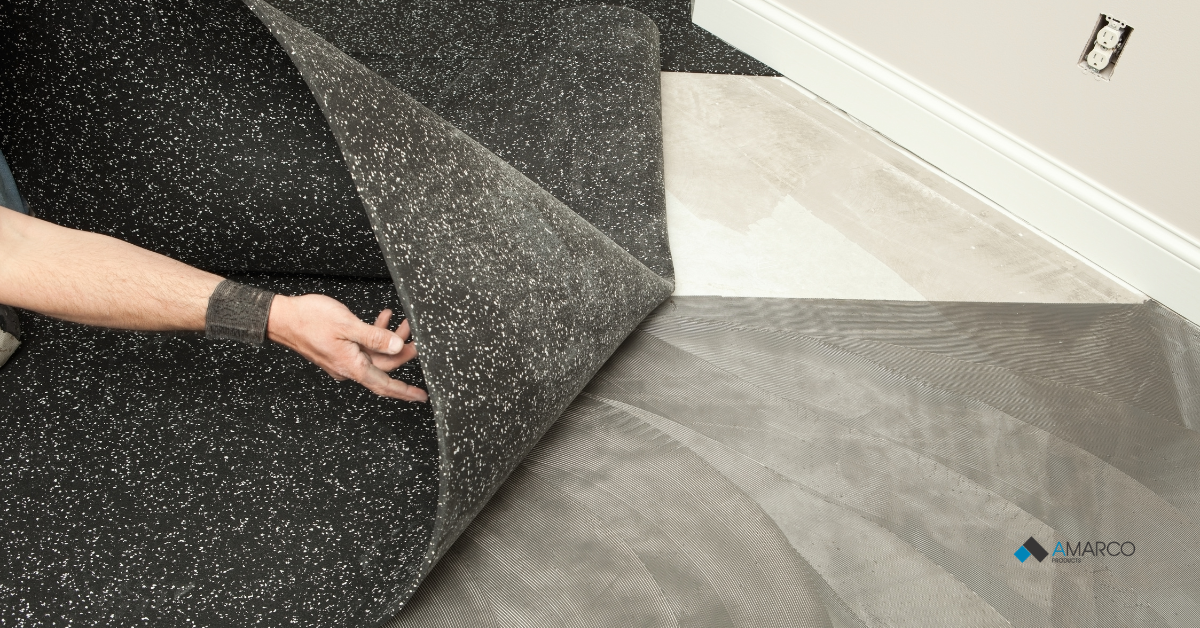
Many modern commercial flooring products utilize a layered approach to provide the best of both worlds. A common manufacturing technique involves bonding a vibrant, resilient virgin rubber surface layer to a highly durable recycled rubber base. This blended approach maximizes LEED credits for rubber flooring while delivering the premium design finish required by top-tier architectural plans.
Odor vs. Indoor Air Quality and FloorScore Certification
The most significant point of confusion in the virgin versus recycled debate revolves around smell and safety. Re-vulcanized recycled rubber can carry a distinct odor. However, a strong rubber smell does not automatically indicate the presence of harmful volatile organic compounds. Odor is an aesthetic issue, while indoor air quality is a health and safety issue.
The only scientific indicator of safe indoor air quality flooring is FloorScore™ certification. This independent certification tests hard surface flooring and adhesives for strict VOC emissions. Whether a product is made from 100% virgin material or fully recycled crumb rubber, FloorScore™ certification is the standard you must verify to ensure the air is safe for building occupants.
Is Virgin Rubber Better Than Recycled Rubber for Commercial Flooring?
Understanding the technical differences between rubber flooring types provides significant advantages for your commercial builds.
By focusing on scientific standards rather than marketing hype, you can achieve the following:
-
Clearer Specification: Eliminate guesswork and specify materials based on concrete functional and aesthetic requirements.
-
Optimized Budgets: Utilize cost-effective recycled bases or blended materials in heavy-use areas without sacrificing the visual appeal of a virgin surface.
-
Maximized Green Building Credits: Confidently select flooring products that contribute to LEED credits for rubber flooring through both recycled content and low-emitting materials.
-
Guaranteed Air Quality: Rely on objective standards like FloorScore™ certification to verify indoor air quality flooring compliance, regardless of the material origin.
-
Client Confidence: Easily address client concerns regarding rubber odors by explaining the scientific distinction between harmless off-gassing and actual VOC emissions.
How Do I Choose the Right Rubber Flooring for My Next Project?
The origin of your rubber flooring is just one factor in a complex specification process. Rather than relying on the hype surrounding virgin vs. recycled rubber flooring, base your decisions on the specific needs of your project environment. Choose virgin rubber for unparalleled color consistency, leverage recycled rubber for unmatched durability and overall value, and always demand FloorScore™ certification to guarantee safety.
Are you ready to specify the ideal resilient flooring for your next commercial build? Contact Amarco Products today to consult with our commercial flooring experts, review technical specifications, and request product samples.
FAQ Section
Does recycled rubber flooring emit more toxic chemicals than virgin rubber?
Not necessarily. The safety of a flooring product depends heavily on its manufacturing process and the structural binders used, not just the origin of the rubber. To guarantee safe indoor air quality, always verify that the specific product holds a FloorScore™ certification, which ensures it meets rigorous VOC emission standards.
How do vulcanized and urethane-bonded rubber differ?
Vulcanized rubber uses intense heat and pressure to meld the materials into a dense, non-porous surface. Urethane-bonded rubber utilizes an adhesive binder to hold rubber granules together. Both manufacturing methods create highly durable commercial floors, but vulcanized options often provide higher moisture resistance and require no additional finish.
Can both virgin and recycled rubber contribute to LEED points?
Yes, both recycled and virgin rubber can earn LEED points. Recycled rubber is highly beneficial for LEED Materials and Resources Credits due to its repurposed content. Virgin rubber can also contribute to LEED Indoor Environmental Quality Credits if it is independently certified as a low-emitting material.
Why does new rubber flooring sometimes have a strong smell?
The characteristic rubber odor is often the natural scent of re-vulcanized materials or the harmless off-gassing of structural binders. If the flooring is FloorScore™ certified, this smell is an aesthetic nuisance rather than a health hazard. The scent will naturally dissipate over time with proper HVAC ventilation.